
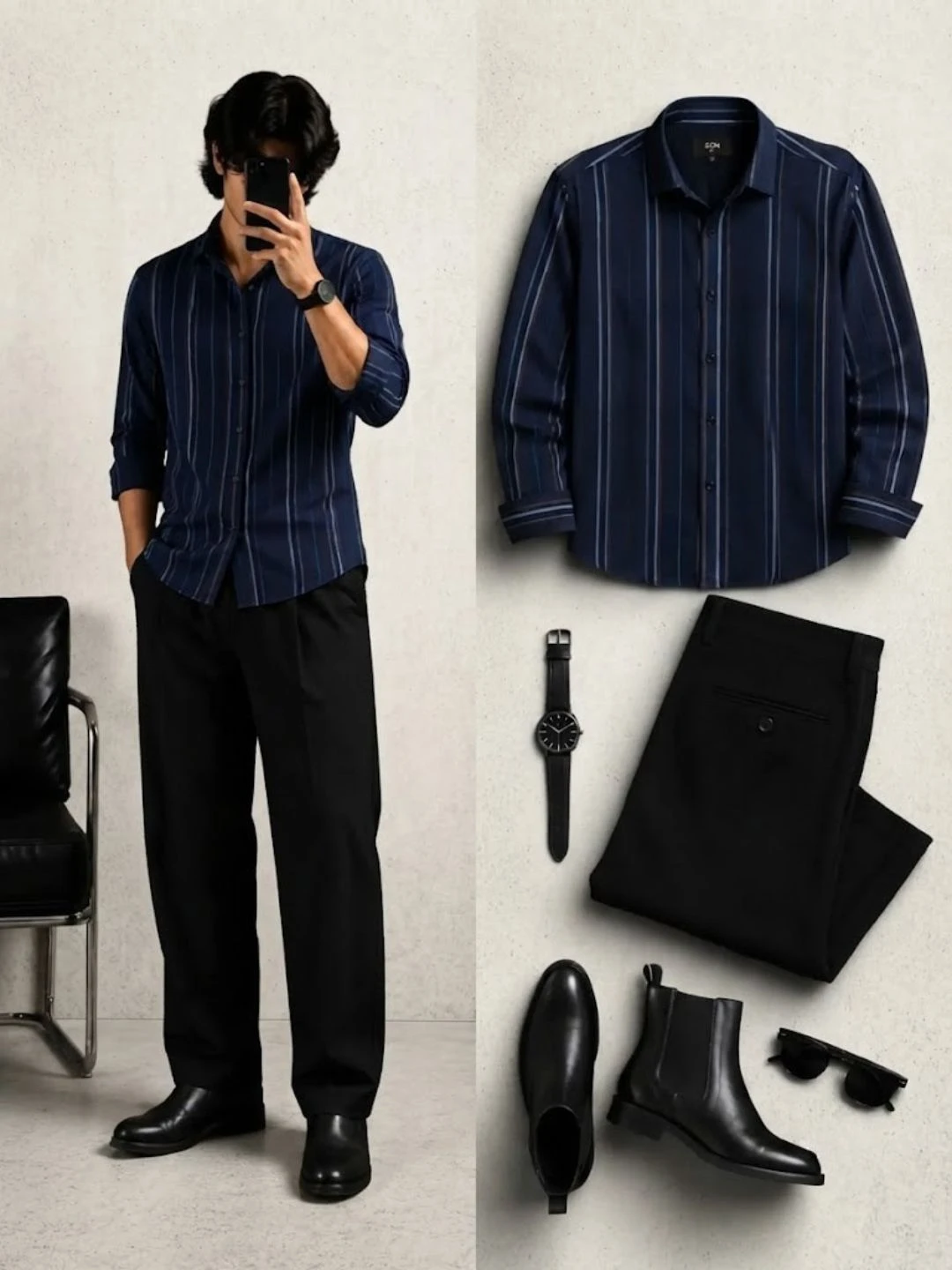
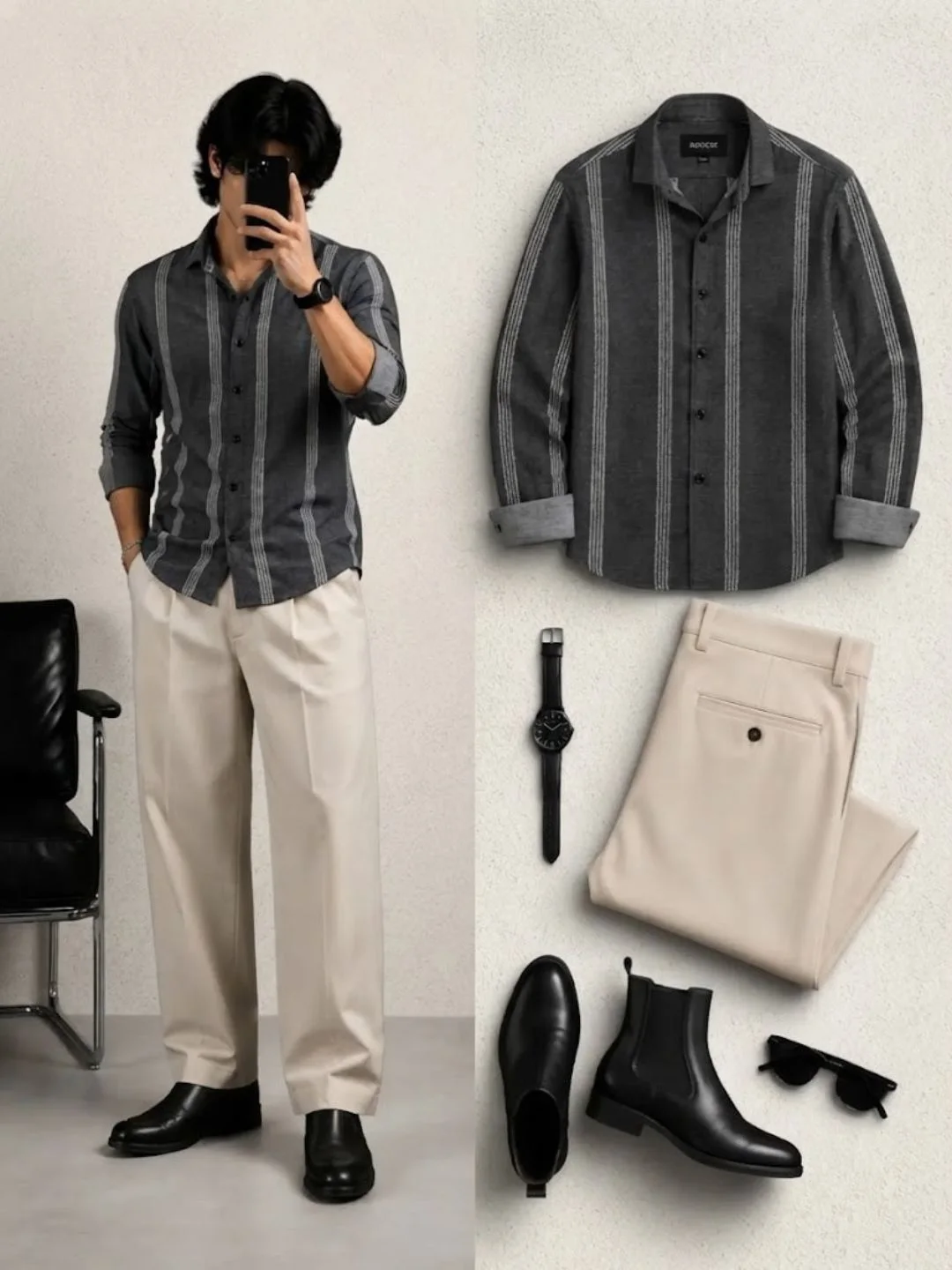
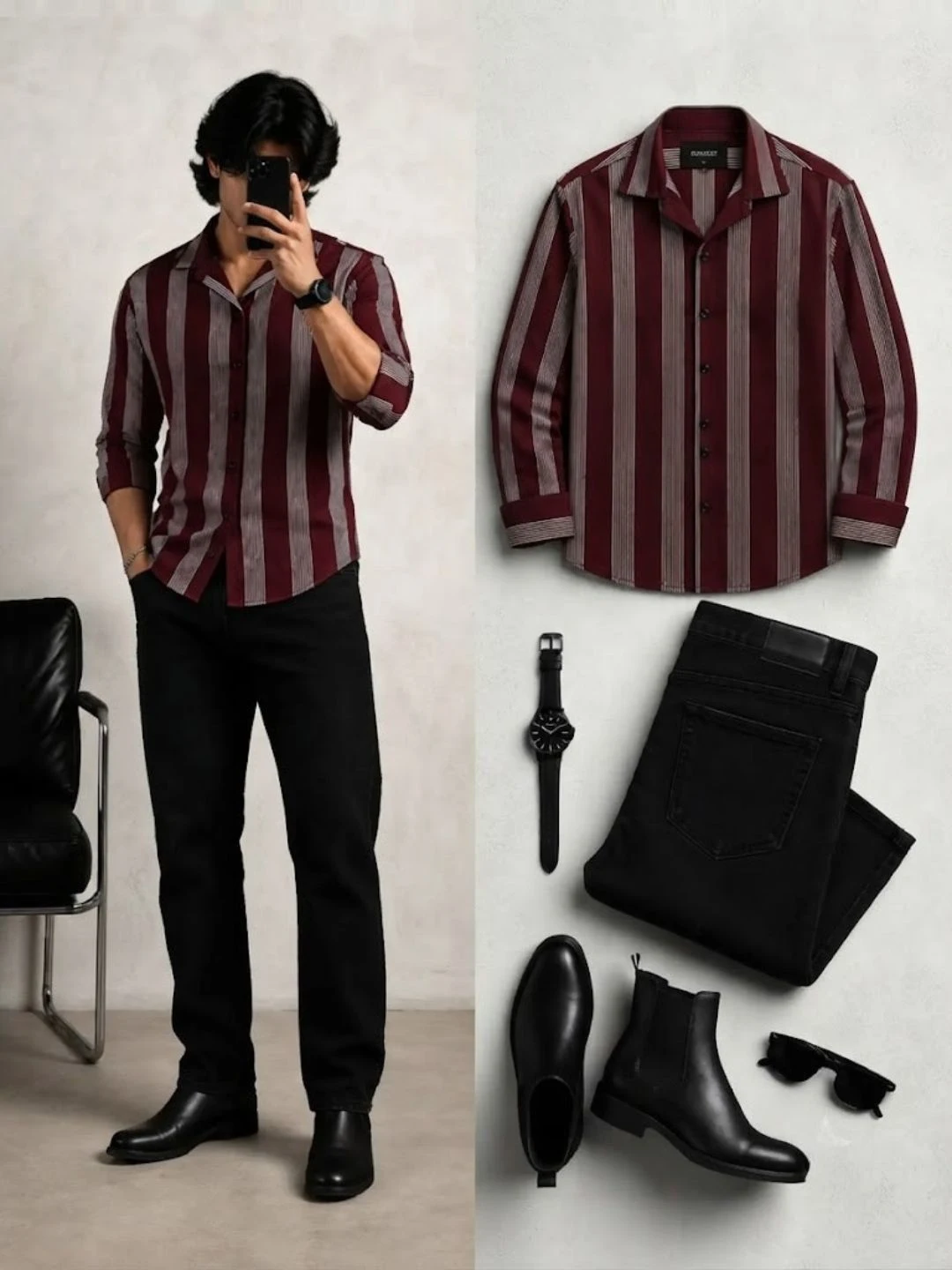
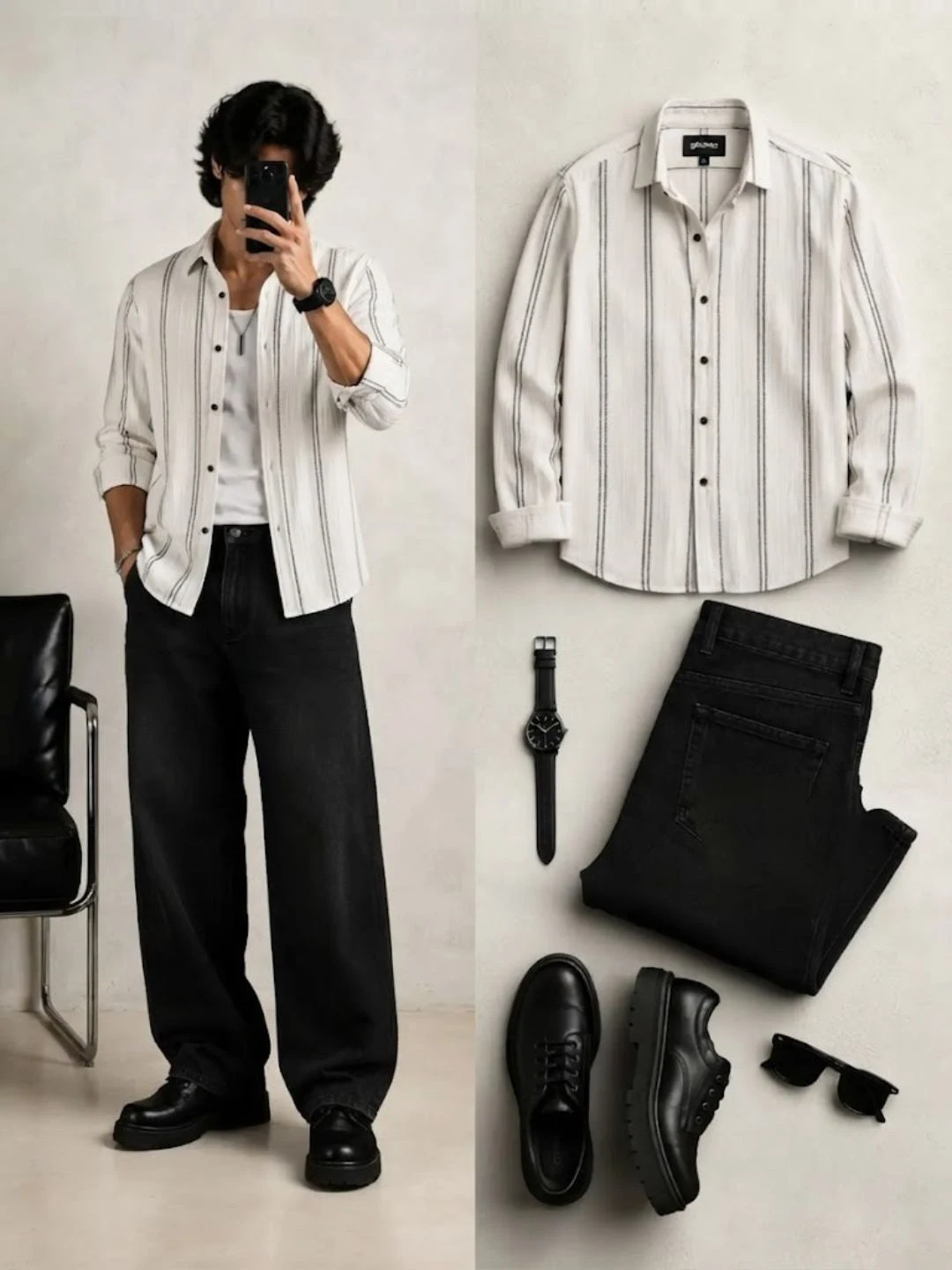


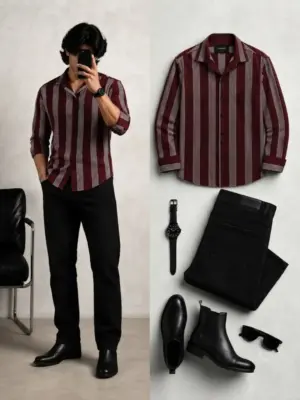

Navy Vertical Striped Long-Sleeve Shirt with Matching Black Trousers


Original price was: ₹999.00.₹129.00Current price is: ₹129.00.
Cash on Delivery Available | Limited Stock | Trending Style
Product Details
- Product Type: Shirt & Trousers Set
- Shirt Color: Navy Blue with Vertical Stripes
- Trousers Color: Solid Black
- Sleeves: Full Sleeves
- Fit Type: Relaxed Modern Fit
- Collar Type: Classic Spread Collar
- Fabric: Premium Cotton Blend
- Pattern: Vertical Striped Shirt
- Style: Smart Casual / Formal / Sophisticated
Master the art of polished dressing with this exceptionally sophisticated two-piece ensemble, featuring a navy long-sleeve shirt adorned with sharp vertical stripes and a crisp spread collar, perfectly paired with sleek, black pleated formal trousers. Crafted from a soft, breathable, and high-quality cotton blend, this set guarantees absolute comfort throughout the day while maintaining a tailored, modern silhouette.
Buying a house is usually the biggest financial decision most people make in their lifetime, yet home insurance gets treated like an afterthought, if it gets considered at all. That’s a strange gap when you think about it, because your home is probably worth far more than your car, and nobody skips car insurance. A structure fire, a burst pipe that floods the whole floor, or a natural disaster can wipe out years of savings in a single event, and a decent home insurance policy exists specifically to absorb that kind of financial shock.
There are really two things you’re insuring here, and people often only think about one of them. Structure cover protects the physical building itself against fire, storm damage, earthquakes, and similar structural risks. Contents cover protects everything inside — furniture, electronics, jewelry, appliances — against theft, fire, or damage. If you’re renting, structure cover isn’t your responsibility, but contents cover absolutely should be on your radar, especially if you own decent electronics or gadgets.
One number worth actually calculating properly is the sum insured. A lot of people just guess a round figure, but the right way to do it is based on the reconstruction cost of the house, not the market value, since insurers pay to rebuild the structure, not to cover the land value underneath it. Underinsuring here is a common mistake that only becomes obvious after a claim, when the payout falls way short of what it actually costs to rebuild.
Premiums for home insurance are honestly some of the lowest you’ll find relative to the coverage amount, often just a few thousand rupees a year for lakhs worth of protection. That low cost is exactly why so many homeowners never bother, assuming a disaster is unlikely enough to skip planning for. But floods, fires, and burglaries don’t check whether you were prepared, and the peace of mind from having a proper policy in place is worth far more than the small annual premium.
Before buying, check whether the policy covers natural calamities specific to your region — earthquake cover matters a lot more if you’re in a seismic zone, and flood cover is non-negotiable if you’re anywhere near a river or in a low-lying area. Read the exclusions carefully too, since normal wear and tear, or damage from poor maintenance, typically won’t be covered no matter how comprehensive the plan looks on paper
| Size | 3XL, 4XL, L, M, S, XL, XS, XXL |
|---|
Leaving Comments
Leave a Comment
Related products










Reviews
There are no reviews yet.